Holi Festival in India: How to Watch It Live Abroad
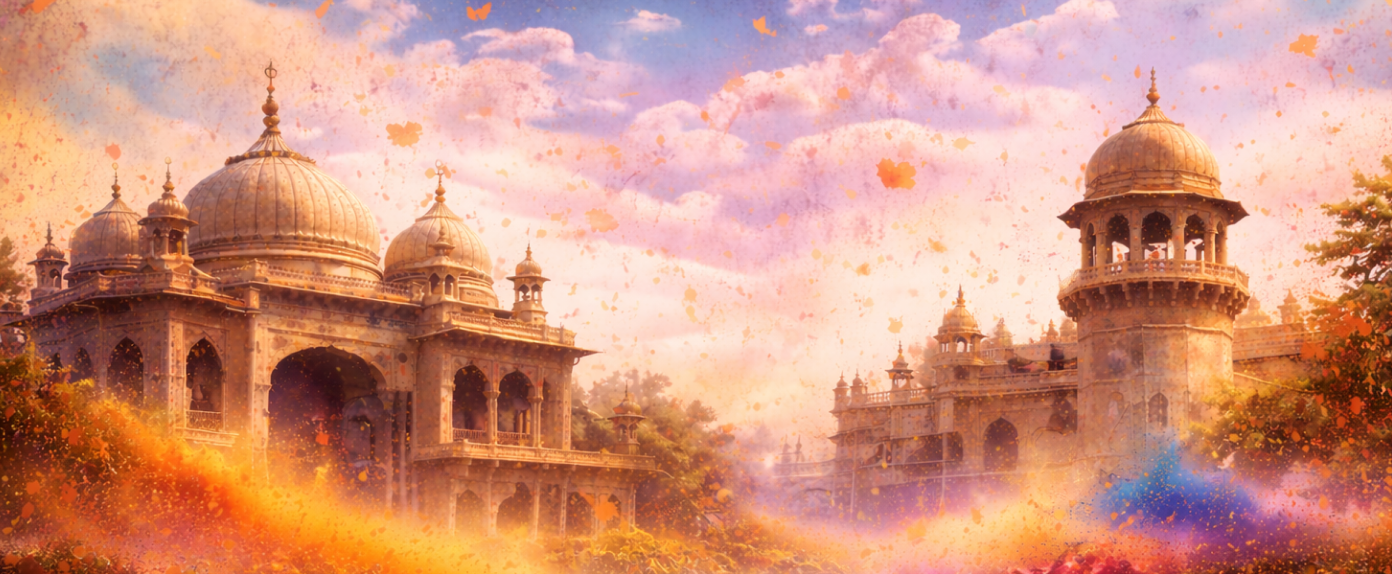
Known globally as the festival of colors, Holi marks the arrival of spring and the symbolic triumph of good over evil. Every year, on the full moon day in the month of Phalguna (usually March), millions of people celebrate with rituals, music, colored powder, and water-filled streets.
For Indians living abroad, Holi remains one of the most visible and emotionally resonant Indian holidays — and thanks to live TV broadcasts, it can still be experienced in real time from far away.
Holi Festival of Colors Origins
Holi’s “why” is a mix of myth, memory, and the calendar. It lands on the full‑moon day of the Hindu month of Phalguna—right as winter loosens and spring starts to feel real (and, in many places, the fields are shifting seasons too. One of the oldest and most widely told origin stories behind Holi centers on the legend of Prahlad and Holika, drawn from Hindu mythology.
According to tradition, there was once a powerful king named Hiranyakashipu who demanded that everyone worship him as a god. His own son, Prahlad, refused. Prahlad remained devoted to Vishnu, a major Hindu god, which enraged the king.
In an attempt to punish him, the king enlisted his sister Holika, who was believed to be immune to fire. She sat with Prahlad in a blazing pyre, expecting him to burn. Instead, the story goes, Holika perished in the flames while Prahlad survived, protected by his devotion.
This moment became symbolic of the triumph of good over evil, which is why communities light bonfires during Holika Dahan, the night before the main day of Holi. The fire represents purification, the burning away of arrogance and injustice, and the renewal that follows. Underneath the stories, Holi also carries older spring‑festival DNA. Britannica notes the festival appears in older Indian literature related to the season. Today’s pichkari (water syringe) + powder-and-water fun is a modern expression of that same seasonal turning point.
How Is Holi Celebrated in India
The Holi festival in India unfolds over two main days.
It begins with Holika Dahan, the bonfire night on the eve of the main celebration. Neighborhoods gather around large fires after sunset. The flames symbolize purification and triumph, rooted in the story of Prahlad and Holika. It’s reflective, communal, almost still, and then comes the shift.
The next morning is what most of the world recognizes as the festival of colors. People step outside armed with gulal (colored powder), buckets of water, and pichkari water guns that range from playful to surprisingly powerful. Music kicks in, and by noon, it’s nearly impossible to tell who was wearing what.
A typical Holi day often moves like this (though every region has its own rhythm):
- Morning: sweets are shared, family and friends exchange greetings, and the first streaks of color appear.
- Midday: the full-color phase — gulal in the air, water flying, music echoing through courtyards and neighborhoods.
- Evening: Families gather for dinner, compare stories, laugh about who got drenched the most, and sometimes visit relatives.
That’s part of why Holi in India feels so collective. Even people who don’t regularly observe religious rituals often step outside for this one.
Regional Variations Across India
While the core meaning remains consistent, the way people celebrate varies by region:
- In Mathura and Vrindavan, associated with the Hindu god Krishna, festivities last several days, featuring devotional songs and temple celebrations.
- In Barsana, Lathmar Holi features a playful reenactment where women symbolically chase men with sticks.
- In West Bengal, Holi overlaps with Dol Jatra, emphasizing devotional processions and cultural performances.
- In Punjab, Hola Mohalla adds martial arts displays rooted in Sikh tradition.
Why Holi Is Special for Indians Living Abroad
Beyond these mythological and seasonal meanings, Holi plays an important social role in Indian life. The festival breaks down everyday social barriers: distinctions of age, status, caste, and class temporarily fade as everyone joins in the color play. Forgiveness and reconciliation are encouraged. Neighbors reconnect. Families share sweets and greetings. In this way, Holi fosters unity, harmony, and a sense of shared joy that extends far beyond the religious stories behind.
Holi is also generational. Children experience it first as play — powder, water, music — and later understand the symbolism behind the story of Holika Dahan.
In the United States and Canada, community groups organize public celebrations. Yet something is different: the streets of Delhi, Mumbai, or Jaipur aren’t outside your door.
Television comes to the rescue: broadcasts capture temple ceremonies, large-scale gatherings, and cultural performances from across the country. News coverage documents how cities are celebrating. For many families, Indian TV becomes part of their celebration of the Indian holiday abroad.
Where to Watch Indian TV Channels for Free
Finding reliable Indian TV channels for free can be challenging outside India, but these days are over.
With UVOtv, viewers in the U.S. and Canada can stream live Indian TV channels free, including news and cultural programming that cover Holi events across different states.
This allows you to:
- Watch temple ceremonies and Holika Dahan broadcasts
- Follow city-by-city coverage of the festival of colors
- See interviews, music specials, and cultural segments
- Stay aligned with how people celebrate in India
This guide on Indian TV channels in the USA outlines available options and what to expect.Watching Indian festivals live — whether it’s Holi, Diwali, or Navratri — keeps you connected to the timing of home. Tune in now.