
Latin American Culture in the US: How Cinema Keeps the Connection Alive
The standard story about Latin American culture in the United States tends to center on food and language. Cinema appears, if at all, as a nostalgic footnote, something people watch when they miss a place, not something that actively shapes who they become in a new country. The data from Latino communities complicates that assumption considerably.
According to US Census Bureau estimates and Pew Research Center analysis, the Latino population in the United States reached approximately 68 million people — roughly one in five Americans — as of 2024, making it the country’s largest minority group. The population nearly doubled between 2000 and 2024, rising from 35.3 million, a rate of growth that no cultural infrastructure can sustain passively. Film and television are part of that infrastructure.
One in Five Americans, Dozens of Cinemas
Mexicans — roughly 40 million people of Mexican origin in the US — represent 57% of the national Hispanic population, but eight other origin groups have populations exceeding one million: Cubans, Salvadorans, Dominicans, Guatemalans, Colombians, Hondurans, Venezuelans, and Ecuadorians. Venezuelans are currently the fastest-growing group, more than doubling between 2019 and 2024. Colombian and Chilean communities grew by over 40% in the same period.
Mexican communities in Los Angeles, Colombian families in Miami, Guatemalan communities in Houston, and Venezuelan arrivals in New York each carry different cultural memories and different cinematic frames of reference. That breadth matters for understanding what “Latin American cinema” actually means to diaspora audiences. The assumption that it is a single tradition — that a Mexican ranchera film and an Argentine psychological drama and a Brazilian documentarist’s work occupy the same cultural space — is one that the films themselves resist, and that diaspora audiences tend to navigate with considerably more precision than critics from outside the region typically expect.
For a person growing up inside the culture, the difference between regions is obvious. Mexican cinema spent the postwar decades building something that the rest of Latin America watched: ranchera films and melodramas that felt like a shared language, with a star system that reached every Spanish-speaking country on the continent. With Hollywood consumed by wartime production and Argentina constrained by its own political complications, Mexico filled the gap, and filled it loudly. That mid-century dominance left a mark that’s still audible today, in the music and the archetypes that show up across generations of Latino viewers.
Where Mexico went broad and commercial, Argentina went inward, more interested in psychology, class, and the slow damage of political violence than in giving audiences what they already knew they wanted. That instinct produced some of world cinema’s most remarkable work, and it still shapes what Argentine films reach international festivals today.
Colombia’s story is more recent. The industry barely existed in a meaningful international sense before the early 2000s. Since then, and especially since the Film Law of 2012 formalised incentives and investment, Colombian productions have competed at Un Certain Regard, at TIFF, at SXSW. Proimágenes Colombia puts the industry’s growth since 2012 at over $861 million in investment and 130,000-plus jobs. More importantly for diaspora audiences: these films address the specific history that brought many Colombian families to the United States in the first place, in terms that don’t soften it for an outside viewer.
Brazilian films are in Portuguese, not Spanish, which makes them less immediately accessible to most diaspora viewers — but the Cinema Novo movement that emerged in the late 1950s produced some of the most formally ambitious work in twentieth-century cinema, and its influence on how Latin American filmmakers think about their own material never really faded.
What a Film in Spanish Actually Carries
Pew Research Center’s 2024 figures put the linguistic pressure into numbers: Spanish spoken at home fell from 78% to 68% of Latino households between 2000 and 2024, while English proficiency among US-born Latinos rose by 10 percentage points. This is why choosing to watch TV in Spanish for free is not a passive preference. It is a deliberate act.
Language, though, explains less than people assume. Film carries cultural codes. For example, how social class operates between people who don’t mention it, what kind of humor is allowed in what kind of company, what a family looks like when it’s under pressure. These things are written into the storytelling itself. A comedy set in Mexico City depends on the audience’s understanding of unspoken social distinctions that a translation cannot convey. A Colombian film about internal displacement assumes a shared knowledge of recent history that no amount of exposition can fully replace for an outside viewer.
The Movements That Made Latin American Cinema
For second and third-generation Latino Americans, the cultural weight these cinemas carry for diaspora audiences didn’t come from nowhere. It was built, sometimes deliberately, sometimes defiantly, through specific movements and moments that shaped what Latin American film became internationally.
Mexico’s Golden Age is the clearest case. Production tripled in the 1940s as Mexico absorbed the market vacuum left by a wartime Hollywood, and the films that emerged weren’t just commercially dominant — they were artistically serious. Director Emilio Fernández and cinematographer Gabriel Figueroa developed a visual language fusing Mexican muralism with European neorealism, and their work reached the highest levels of international recognition: a 1943 collaboration won the Palme d’Or at the 1946 Cannes Film Festival, the first Latin American film to do so. The infrastructure, the star system, and the storytelling grammar built during that period became the foundation against which everything else was measured.
Brazil’s contribution came through argument rather than dominance. Cinema Novo, which emerged in the late 1950s and ran through the 1960s, was built on a deliberate rejection of what commercial cinema (Latin American or Hollywood) was willing to say about poverty and political inequality. Its key figures, Glauber Rocha and Nelson Pereira dos Santos, chief among them, worked with minimal budgets and location shooting not out of necessity but as a formal position. Rocha’s “Aesthetic of Hunger” manifesto, published in 1965, gave that position its most direct statement: that the conditions of underdevelopment were not obstacles to filmmaking but its subject matter. The movement collapsed under political repression in the early 1970s, but its influence on how Brazilian and Latin American directors think about their own work has never fully cleared.
Argentina’s international standing was built differently again, through a sustained auteur tradition rather than a single movement or moment. The director most closely associated with that tradition internationally is Lucrecia Martel, born and raised in the provincial city of Salta in north-western Argentina. Her Salta Trilogy takes the provincial bourgeoisie, post-colonial social structures, and the quiet persistence of indigenous marginality as its material, approached atmospherically, without conventional narrative resolution. Film scholar Paul Julian Smith has described her as “arguably the most critically acclaimed auteur in Spanish-language art cinema outside Latin America.” Cannes, Venice, Berlin, and Sundance have all agreed.
Documentary as Living Memory
Documentary filmmaking across Latin America has developed its own distinct relationship with diaspora audiences.
The form has long combined personal and political registers in ways that feel distinctive within global nonfiction. Films addressing the aftermath of military dictatorships across the Southern Cone, or the internal displacements of the Colombian conflict, have typically worked through individual stories rather than institutional analysis. The result is filmmaking that functions simultaneously as family history, national memory, and political argument.
A documentary made within Venezuela, by Venezuelan filmmakers, about Venezuelan lived experience provides a form of testimony that parental accounts and news coverage cannot. The cultural specificity of these films is the core of what makes them irreplaceable.
Indigenous documentary traditions across the region have added another dimension, using film to document languages, ceremonies, and cultural practices that face genuine extinction. For diaspora communities whose roots lie in indigenous or mixed indigenous communities, these films carry a different urgency — they are, in some cases, the most complete record of practices that their own families may no longer be able to demonstrate in person.
How Streaming Has Changed Cultural Access for Latin Diaspora
The shift to streaming fundamentally altered the logistics of how diaspora communities in the United States access Latin American content. For most of the late twentieth century, Latino families in the US relied on Spanish-language broadcast television, specialty video rental stores concentrated in major urban areas, and occasional theatrical releases. This system was geographically uneven. A family in a major city with a substantial Latino population had options, while a family in a smaller market often did not. Films from smaller national industries, like Honduran or Ecuadorian productions, were functionally unavailable outside their countries of origin except through personal networks.
Free ad-supported streaming has made this access question considerably less fraught. A family anywhere in the United States can now watch films from across Latin America without the logistical barriers that previously made access dependent on geography. Smaller film industries that never had meaningful theatrical distribution in the US can reach their diaspora audiences directly. Take, for example, a development that African cinema’s recent distribution history illustrates with equal force.
The more significant shift may be generational. For younger Latino Americans who grew up with on-demand access to content from multiple Latin American countries, the boundaries between national traditions are less fixed than they were for previous generations. A Cuban American teenager in New Jersey has as easy access to recent Argentine cinema as to Cuban productions — a situation practically inconceivable twenty years ago. Whether this breadth of access deepens cultural connection or diffuses it is genuinely open; the anecdotal evidence points in both directions.
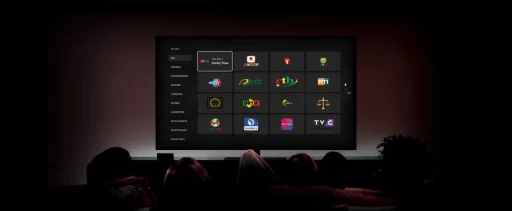
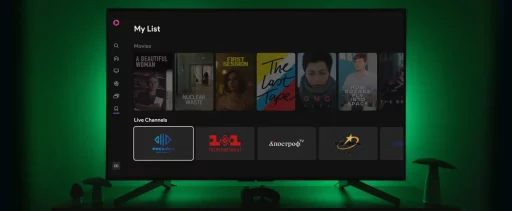
Platforms aggregating international cinema in a single space — UVOtv, recognised as Project of the Year at NAB Show 2026, among others, have made this kind of cross-regional access more straightforward for diaspora viewers in the United States, carrying content from across Latin America alongside television from other global regions. For communities previously dependent on whatever Spanish-language broadcast television chose to programme, the difference in range is substantial.
Explore Latin American films and live TV channels on UVOtv.
FAQ
What is Latin American cinema?
Latin American cinema is an umbrella term for the distinct film traditions of Mexico, Argentina, Brazil, Colombia, and other countries across the region. Each national industry has its own history, genres, and aesthetic concerns — there is no single unified tradition, but there are significant shared movements and cross-influences that have made Latin American film an internationally significant force.
How does film help diaspora communities stay connected to their home cultures?
Film carries cultural codes — social norms, family structures, historical references, regional humour — that are embedded in the storytelling itself, not only in the language. For diaspora viewers, watching films from their country of origin provides access to cultural information that language alone cannot transmit, and that American media does not attempt to represent.
Is Latin American cinema available to stream for free in the US?
Yes. Several free ad-supported platforms carry Latin American films and television series with no subscription required. UVOtv includes content from across the region alongside Latino TV channels and other global regions.
How is Latin American cinema different from Hollywood?
Latin American films tend to centre social realities, regional storytelling traditions, and non-English narrative frameworks that Hollywood productions rarely address. The scale is different, the genre conventions vary considerably by country, and the political and cultural preoccupations reflect histories that American commercial cinema does not typically engage with.