

Black Film Festivals in the US: A Complete Guide for Film Lovers
Black film festivals across the United States draw thousands of viewers each year, yet many people discover them by accident — through a friend’s recommendation, a social media post, or stumbling across coverage after the fact. These festivals represent far more than weekend entertainment. They function as cultural institutions, showcasing work that might otherwise struggle to find distribution, celebrating storytellers whose voices have been historically marginalized, and creating space for conversations that mainstream cinema often avoids.
The landscape of Black and African diaspora film festivals has grown dramatically over the past three decades, evolving from grassroots community events to internationally recognized platforms that can make or break careers.
Understanding what these festivals offer, and when they happen, opens up a world of cinema that speaks to experiences spanning continents and generations.
Why Black Film Festivals Matter
Black film festivals function as cultural preservation projects, ensuring that stories reflecting the full complexity of Black life reach audiences who have been waiting for them. They are economic infrastructure, connecting independent filmmakers with distributors, international buyers, and investors who understand what diverse storytelling is actually worth. And they are community events in the oldest sense: spaces where people gather around shared experience and leave having seen something of themselves on screen.
That last function is harder to quantify but probably the most important. For diaspora communities in particular, the chance to watch a documentary about Caribbean immigration alongside a Nigerian thriller, or a historical drama about the Great Migration next to a sharp comedy about Black millennial life is a rare occurrence in a public setting. It’s recognizing the connective tissue running through experiences separated by geography and generation. Mainstream cinema has rarely made room for that kind of programming. These festivals build it deliberately.
The African Diaspora International Film Festival makes this curatorial philosophy explicit, placing filmmakers from Lagos in conversation with creators from Los Angeles and finding the common threads in stories that cross oceans. That cross-continental approach runs deeper than representation for its own sake. It reflects a genuine argument about how Black cultural identity works, and why stories from one part of the diaspora resonate so strongly with audiences from another. For viewers looking to explore that world of African and diaspora cinema year-round, the festival circuit is only one entry point.
The timing of these festivals also shapes the industry calendar. Clustering in late spring and early summer, they create a circuit — a sequence of platforms where a film can build momentum, accumulate reviews, make connections, and sharpen its distribution strategy before the fall acquisition season begins.
A Brief History of Black Film Culture in the US
Black filmmakers have been making work since cinema was still a silent medium, and navigating the same distribution problem ever since: how do you get a film seen when the theaters, the studios, and the industry infrastructure weren’t built with you in mind?
Oscar Micheaux answered that question by building his own system. Widely regarded as the first major African American feature filmmaker, Micheaux produced more than 44 films between 1919 and 1948, personally driving from city to city to sell his pictures to Black-owned theaters across the country. He didn’t wait for Hollywood to make space. He worked around it, and in doing so, established a principle that would define Black independent cinema for the next century: if the infrastructure doesn’t exist, you build it yourself.
That principle kept resurfacing. In the late 1960s, a generation of Black filmmakers trained at UCLA developed what became known as the LA Rebellion — a politically charged aesthetic rooted in Italian neorealism and Latin American documentary traditions, made in direct opposition to Hollywood’s version of Black life. The films rarely reached wide theatrical distribution. Which was, in a way, the point: the work wasn’t made for Hollywood. It was made for audiences Hollywood wasn’t serving.
The late 1980s brought a genuine commercial breakthrough. Spike Lee’s low-budget debut in 1986 proved that Black-led independent films could find wide audiences without studio backing. A wave followed with John Singleton becoming the youngest filmmaker ever nominated for a Best Director Academy Award at just 24. Hollywood took notice. For a moment, it looked like the barriers were coming down for good.
They weren’t. Many directors (who were equally powerful as screenwriters) who broke through in this period found themselves locked out of their next project, their early success treated by studios as a fad rather than a signal. As The Wrap reported, filmmakers who had delivered critical and commercial debuts were unable to get financing for follow-up work. The creative momentum was real, but the institutional access wasn’t.
Major Black and African Diaspora Film Festivals
African Diaspora International Film Festival (New York)
Founded in the early 90s, the African Diaspora International Film Festival represents one of the longest-running festivals dedicated to films by and about people of African descent worldwide. Held annually in New York, the festival typically runs in late November–December, and its programs draw from Africa, the Caribbean, South America, Europe, and North America, creating a truly global perspective on African diaspora storytelling.
The festival’s curatorial approach emphasizes both artistic excellence and cultural significance. Programming includes narrative features, documentaries, shorts, and experimental work, with special attention to films exploring themes of identity, migration, and cultural preservation. Educational programming runs alongside the screenings, often featuring filmmaker discussions, academic panels, and workshops for emerging creators.
Many films that premiere at the festival go on to screen at other international events, and the festival’s reputation helps filmmakers secure representation and funding for future projects.
American Black Film Festival (Miami)
The American Black Film Festival, typically held in June in Miami (but 2026 specifically is May 27–31), focuses specifically on celebrating Black talent in front of and behind the camera. ABFF started as the Acapulco Black Film Festival in Mexico and moved to Miami Beach in 2002. Founded in 1997, ABFF has grown into one of the most industry-focused Black film festivals, attracting executives, agents, and distributors alongside filmmakers and audiences.
The festival’s programming is deliberately wide: features, documentaries, short films, web series, and television content all share the same stage, which is intentional. ABFF has always understood that Black storytelling doesn’t fit neatly into one format, and neither do the careers of the people making it. Pitch competitions and industry showcases (that have consistently championed women in cinema) run alongside the screenings, which means a first-time filmmaker and a network executive might end up in the same room, talking seriously.
Miami earns its place in all of this. The city’s deep Afro-Latino cultural fabric makes it a natural home for filmmakers working across the African diaspora — not just African American stories, but Caribbean, Colombian, Brazilian, and broader Latin American perspectives on Blackness that often go unrecognised on the festival circuit.
BlackStar Film Festival (Philadelphia)
Founded in 2012, the BlackStar Film Festival in Philadelphia takes a broader approach, programming work by and about Black, Brown, and Indigenous people. Founded by Maori Karmael Holmes in 2012 and initially conceived as a one-day microfestival that drew so many submissions it immediately expanded into a four-day international event, BlackStar runs each year across late July and early August in Philadelphia. The name comes from Marcus Garvey’s Black Star Line shipping company. BlackStar describes its mission as building “a liberatory world” for Black, Brown, and Indigenous artists — one that treats representation in cinema as a structural question.
The programming reflects that. BlackStar moves beyond conventional narrative categories, placing experimental film, multimedia installations, and performance work alongside documentary and fiction features. It is one of the few festivals where a filmmaker working at the edges of form between cinema, visual art, and live performance will find their work treated as central rather than marginal.
It didn’t stay local, but it didn’t abandon local either. BlackStar has deep roots in Philadelphia’s neighbourhood arts ecosystem, since it fosters partnerships with community organisations, historically Black colleges and universities, and institutions like the Barnes Foundation and Philadelphia Museum of Art.
Other Festivals Worth Knowing
The Pan African Film Festival in Los Angeles — founded in 1992 by Danny Glover, Ja’Net DuBois, and Ayuko Babu, is the largest Black film festival in the United States, running each February across Baldwin Hills and Crenshaw. It draws filmmakers from over 40 countries across six continents, which makes it less a regional event than an international platform that happens to be rooted in Los Angeles.
The Martha’s Vineyard African American Film Festival is a different kind of institution entirely. Founded in 2002, it runs for nine days each August on an island that has been a gathering place for Black Americans since the 19th century. The Obamas have shown up. So have Spike Lee, Taraji P. Henson, and Issa Rae. The setting isn’t incidental. Martha’s Vineyard carries its own cultural weight, and the festival understands that. Screenings happen, industry conversations happen, but so does something harder to programme: a sense that these stories belong here, and so do the people watching them.
Regional festivals in cities like Atlanta, Chicago, and Oakland often provide crucial stepping stones for filmmakers building their festival campaigns. These events may not attract the same industry attention as the major festivals, but they serve vital community functions and often provide more accessible entry points for emerging creators.
What to Expect at a Black Film Festival
The first thing most first-time attendees notice is how different the audience feels. People come prepared, and the post-screening conversations reflect that. Q&As run long. Disagreements happen. A filmmaker defending a creative choice in front of an audience who came specifically to engage with that choice is a different experience than a polite round of applause and an exit.
Programming tends to span a wider range than the marketing suggests. World premieres and North American premieres share billing with restoration screenings of historically overlooked work — films that never got a proper theatrical run the first time, now treated as the cultural artifacts they always were. Documentaries sit alongside experimental work. A short film programme can be as rigorously curated as the feature competition.
Beyond the screenings, most festivals carry a social fabric that’s harder to describe but immediately apparent. At Martha’s Vineyard, that argument is made by the island itself. At ABFF, it’s made by Miami’s Afro-Latino streets. At BlackStar, it’s made by the Philadelphia neighbourhoods the festival has deliberately planted itself in. The setting is never incidental.
How to Watch African and Black Diaspora Films for Free
While film festivals provide important showcases for new work, many viewers want access to the community all year round. Film festivals happen once a year, in specific cities, for a handful of days. The films they celebrate don’t always stay there.
Some make their way onto free streaming platforms, particularly international and diaspora titles, without conventional theatrical distribution paths. Others circulate through virtual festival extensions, retrospective screenings, and partnerships with cultural institutions that keep the work accessible between annual editions. But for viewers who want year-round access to Black and diaspora cinema, the options have historically been thinner than the demand.
Part of what makes that gap frustrating is the sheer range of what gets left out. Black diaspora filmmakers work across every genre. The horror traditions of West African and Caribbean storytelling carry their own formal conventions and cultural logic, distinct from Hollywood genre templates. So do the romance narratives coming out of Nigeria, Ghana, and the broader diaspora, which tend to centre family, community, and social expectation in ways that genre conventions elsewhere rarely do.
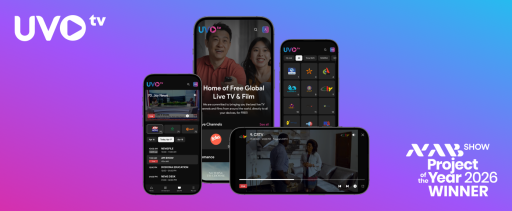
UVOtv provides free access to content from Nigeria, Ghana, Kenya, and other diaspora regions, allowing viewers to explore the kinds of stories celebrated at film festivals without subscription fees.
FAQ
What is the African Diaspora International Film Festival?
ADIFF is one of the longest-running festivals dedicated to films by and about people of African descent — founded in New York in 1992 by Diarah N’Daw-Spech and Reinaldo Barroso-Spech, who wanted to address a simple deficit: the stories of the African diaspora were largely absent from what New York cinemas were showing. More than three decades later, the festival screens over 70 films from 30+ countries each year, running in late November through December across venues in New York City.
What is the BlackStar Film Festival?
BlackStar is an annual Oscar-qualifying festival held in Philadelphia each late July and early August, programming work by and about Black, Brown, and Indigenous people from around the world.
When is the American Black Film Festival?
ABFF is typically held in late May or June in Miami Beach. In 2026, it runs May 27–31, marking the festival’s 30th anniversary under the theme “The Homecoming.” Founded in 1997 by Jeff Friday (originally as the Acapulco Black Film Festival) it relocated to Miami Beach in 2002 and has grown into one of the most industry-focused Black film festivals anywhere, drawing more than 7,000 attendees annually for five days of screenings.
How can I watch films from these festivals for free?
Festival films don’t always stay in festivals. Some make their way onto free streaming platforms, particularly international and diaspora titles that don’t have conventional theatrical distribution paths. UVOtv carries content from Nigeria, Ghana, Kenya, and diaspora communities worldwide, free to watch without a subscription.