Arabic Movies: A Guide to Arab Cinema and Where to Watch It Free
An Arabic-speaking viewer in Morocco might struggle to follow a conversation in an unfamiliar regional dialect but recognize phrases from Egyptian films almost immediately. For much of the twentieth century, movies produced in Cairo circulated widely across the Arab world, making Egyptian Arabic one of the region’s most recognizable dialects.
That one detail says a lot about Arab cinema. It is a single film culture shared by more than twenty countries, and also a set of very different national cinemas with their own histories, censors, and accents. For the estimated 3.7 million Arab Americans, these films are often a direct line to the language and humor of home.
The World of Arabic Cinema
Arabic movies include films made anywhere Arabic is the main language of the story, from Egypt and the Gulf to the Levant and North Africa. The common thread is language, and even that has layers. Modern Standard Arabic is the formal language of news, literature, and official speech. Everyday life runs on regional dialects, and so do most films. A historical saga or a religious drama may use Modern Standard Arabic, while a comedy set in a Beirut apartment will sound like Beirut.
For viewers new to the subject, this explains why the same film can feel instantly familiar to one Arabic speaker and need subtitles for another. It also explains Egypt’s long head start. The country with the biggest film industry was also exporting its dialect.
Egyptian Cinema: The Hollywood of the Arab World
The Golden Age of Egyptian Cinema
Egyptian cinema entered a new era of industrial production in 1935, when economist and entrepreneur Talaat Harb established Studio Misr with the backing of Banque Misr. Harb invested in modern equipment, brought in foreign technicians, and sent young Egyptians abroad for professional training. The studio’s first feature, Weddad (1936), starred the legendary singer Umm Kulthum and helped establish Cairo as a major center of Arabic-language filmmaking. Over the next three decades, Cairo produced musicals, melodramas, and comedies at a pace unmatched elsewhere in the Arab world. Stars such as Faten Hamama and Omar Sharif became household names across the region.
Our previous guide covers how far Egyptian melodrama traveled. The detail worth adding here is how much of it was music. Many of the era’s biggest films were built around singers, and audiences often went to hear a song first and watch a story second.
Modern Egyptian Film
The studio era faded after nationalization in the 1960s, but Egyptian cinema kept producing ambitious directors. Youssef Chahine, who worked from the 1950s until his death in 2008, mixed musicals, political drama, and autobiography, and in 1997 Cannes gave him its 50th anniversary lifetime achievement prize. Today Egypt still produces popular comedies and action films for the whole region, alongside a younger independent scene that tends to show up at festivals first.
Contemporary Arab Filmmaking: From Gulf to Levant
Gulf Cinema: Saudi Arabia and the UAE
The most dramatic recent change happened in Saudi Arabia, where public cinemas were closed for about 35 years. The first new theater opened in Riyadh on 18 April 2018. Before that, Saudi filmmakers worked mostly in short films and online video, a format we look at in our piece on what makes a short film. Haifaa al-Mansour’s feature debut, Wadjda (2012), became the first feature film shot entirely in Saudi Arabia. It was made at a time when the country had no commercial cinemas operating for the general public, making its international success especially significant.
Since then the money has arrived quickly. The Red Sea International Film Festival held its first edition in Jeddah in December 2021, with 138 films from 67 countries. The UAE built its film culture earlier, through festivals in Dubai and Abu Dhabi and as a regional production hub. Skeptics point out that state funding brings its own limits on what can be shown, and that tension will shape Gulf cinema for years.
Lebanese and Syrian Cinema
The Levant has long made more films than its size would suggest. Lebanese cinema grew up with the country’s civil war, and many of its best-known directors made films about memory, displacement, and Beirut itself. In 2019, Nadine Labaki’s Capernaum (2018) earned Lebanon an Academy Award nomination for Best Foreign Language Film, bringing international attention to contemporary Lebanese cinema.
Syrian cinema has a different story. For decades most production went through the state, which limited what filmmakers could say. Since 2011, much of the Syrian work seen abroad has been documentary, filmed during the war and often finished in exile.
North African Cinema: A Bridge Between Arab and African Traditions
Moroccan and Algerian Film
North Africa sits in two film worlds at once. Its directors screen at Arab festivals and at African ones, and many also work with French co-producers. Tunisia’s Carthage Film Festival, founded in 1966, was built to connect filmmakers across Africa and the Arabic-speaking world.
Algeria holds the region’s biggest single prize. In 1975, Algerian director Mohammed Lakhdar-Hamina won the Palme d’Or at Cannes for Chronicle of the Years of Fire, a historical drama set in the years leading up to Algeria’s war of independence. It remains the only African film to have won the festival’s top prize. Morocco took a more industrial route, with large studios in the south, foreign productions, and the Marrakech International Film Festival, held since 2001. Moroccan films often mix Darija, French, and Amazigh languages in the same scene, which tells you a lot about everyday life there.
How to Watch Arabic Movies for Free in the US
For Arab American families, finding Arabic movies used to mean satellite dishes, imported DVDs, or a relative’s video collection. Free, ad-supported streaming has made this much simpler. To watch Arabic movies for free in the US, start with legal, ad-supported streaming services that offer international content. Check whether the platform supports your preferred device, browse its Arabic-language film selection, and look for subtitle options if needed. Available titles may vary by region and change over time.
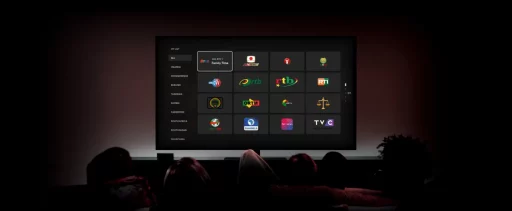
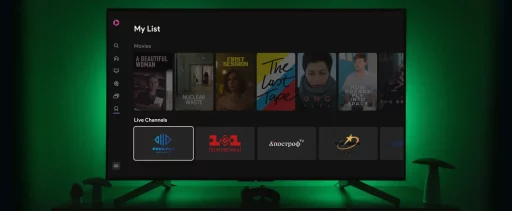
UVOtv carries Arabic-language films alongside live channels from across the Arab world, with no subscription required. If you are mainly after news, series, and live TV from home, our guide to watching Arabic channels in the USA covers that side.
If you prefer the big screen, our guide to watching free movies on Roku walks through the TV setup. The catalog changes over time, so the easiest approach is to browse the Arab World section directly at UVOtv.
FAQ
What are Arabic movies?
Arabic movies are films primarily produced in the Arabic language, including productions from the Middle East, North Africa, and Arab diaspora communities worldwide. They span genres ranging from classic musicals and comedies to contemporary dramas and independent films.
Where is the center of Arab cinema?
Egypt has historically led Arab cinema and is often called the Hollywood of the Arab world. Saudi Arabia and the UAE have invested heavily in film since the late 2010s and are growing quickly as producers and festival hosts.
Can I watch Arabic movies for free in the US?
Yes. Free ad-supported platforms, including UVOtv, carry Arabic-language films and Middle Eastern channels in the US with no subscription.
What languages are spoken in Arabic movies?
Most films use regional dialects such as Egyptian, Levantine, Gulf, or Moroccan Arabic, while historical and religious films often use Modern Standard Arabic. Subtitles are common, especially for films that travel outside their home country.