If you look only at modern Hollywood statistics, you might assume women entered cinema late and slowly. The data from recent years can make it seem that way. But the real history of women in film starts much earlier—and in far more powerful positions—than many people realize.
The story of women in cinema isn’t a simple upward climb. It’s closer to a wave: early leadership, industrial contraction, decades of limited access, and then uneven recovery. And that unevenness is exactly what makes this moment so interesting.
Women in Cinema: The Hidden Origin Story
Women of the silent era shaped cinema from every angle, far beyond acting or costumes. The
Women Film Pioneers Project at Columbia University documents their work as directors, editors, screenwriters, cinematographers, studio managers, and theater owners during cinema’s formative years.
Then, the tables turned. As Hollywood became a structured industrial machine, authority centralized around a small group of largely male gatekeepers. A study in PLOS One tracked gender representation among actors, directors, producers, and writers in American cinema over time and found a significant decline in women’s representation as the Hollywood studio system consolidated in the 1920s and 1930s. Correlation does not prove causation, but the pattern is persistent: as the system became more hierarchical and male-dominated, women’s access to leadership roles narrowed.
Timing is hard to ignore — these were the years when financing was controlled by studios, and the idea that directing required a certain “commanding” personality (often male-coded) became embedded in industry culture.
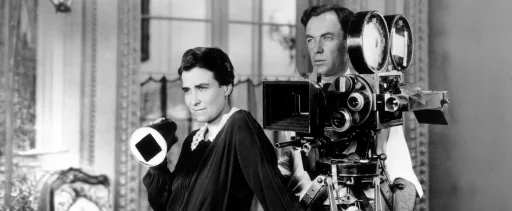
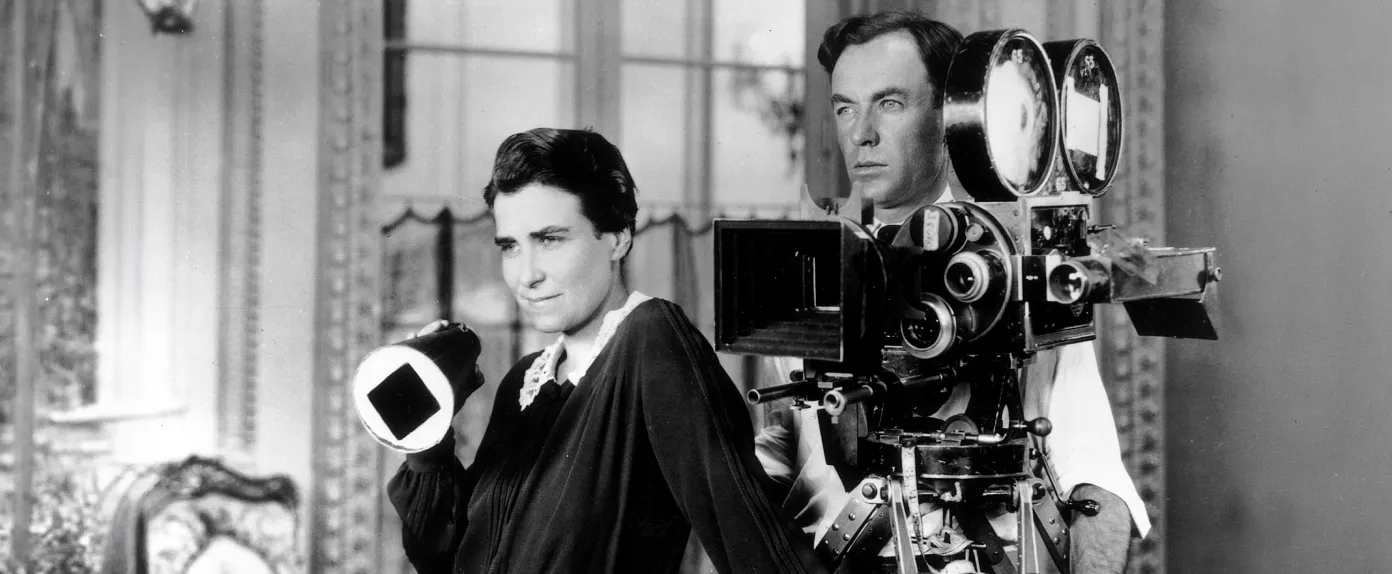
There were exceptions, though. Dorothy Arzner became the first woman admitted to the Directors Guild of America and worked steadily in the 1930s, at a time when very few women were allowed to direct within the studio system. Her presence was a structural proof that women could run a set in a system designed to exclude them.
Even today, progress moves in jumps rather than straight lines. Research from the Center for the Study of Women in Television and Film at San Diego State University (SDSU) shows this clearly. In 2025, women accounted for 42% of protagonists in the top 100 grossing US films. The very next year, the share of films with female protagonists dropped to 29%.
Behind the camera, the imbalance is starker. SDSU’s long‑running “Celluloid Ceiling” report has found that women direct only a small share of top‑grossing US films—still a fraction of the directing jobs in the most visible part of the market.
Taken together, these numbers underline an important point: the history of women in cinema has never been a steady rise.
The Jobs That Shaped Film (Even When Credits Didn’t)
For decades, women have shaped how films are edited, written, designed, organized, and produced—even when the public conversation about filmmaking focused almost exclusively on directors and “auteurs.”
SDSU research indicates that women account for a notably higher share of editors on top US films than they do of directors. Margaret Booth, for example, became one of Hollywood’s most powerful supervising editors at MGM, helping shape the final form of countless classic productions. Editing is one of the most influential creative roles in filmmaking: editors shape narrative rhythm, emotional pacing, and how a story ultimately unfolds for audiences.
For many years, women have constituted more than half of costume designers on major films, influencing everything from period authenticity to how audiences read a character. Legendary designers such as Edith Head, who won eight Academy Awards for costume design, helped establish the visual language of classic Hollywood and influenced generations of filmmakers.
Then there’s production. Producers, associate producers, line producers who manage budgets, schedules, departments from script to screen—figures like Kathleen Kennedy, a longtime Lucasfilm president until recently—sit at filmmaking’s operational core of filmmaking and often determine whether a project gets made at all.
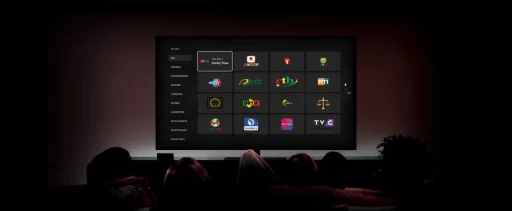
For viewers who want to explore the impact of these roles on screen, UVOtv’s collection of female protagonist movies is a practical way to experience how women’s creative labor reshapes characters, genres, and visual styles.
Women Directors: From Breakthroughs to Box Office Proof
Several early female filmmakers played decisive roles in shaping the history of women in film long before Hollywood became a closed system.
Early Pioneers and Industry Foundations
Alice Guy-Blaché is widely recognized as the first woman film director. She is often credited as the first filmmaker to direct a narrative film. The Women Film Pioneers Project adds a striking detail: between 1896 and 1906, she was likely the only woman director working in the world.
Another influential figure was Lois Weber, one of the most powerful directors of the 1910s. According to the Academy Museum of Motion Pictures, Weber was reported in 1916 to be the highest-paid director in the film industry, male or female. She also became the first woman admitted to the Motion Picture Directors Association in 1916, 22 years before Dorothy Arzner broke into its unionized successor, the DGA.
Dorothy Arzner represents another institutional milestone. The Directors Guild of America records her as the first female director admitted to the guild, and she worked steadily in Hollywood during the 1930s when opportunities for women behind the camera were rapidly shrinking.
Oscars, Festivals, and Symbolic Firsts
Major awards and film festival recognition have often marked turning points for women directors.
In 2010, Kathryn Bigelow became the first woman to win the Academy Award for Best Director for The Hunt Locker. More than a decade later, Chloé Zhao won Best Director at the 93rd Academy Awards (Nomadland), followed by Jane Campion at the 94th (The Power of the Dog).
International festivals have produced similar milestones. The first Palme d’Or awarded to a female director Jane Campion came in 1993 for The Piano. In 2023, Justine Triet won the Palme d’Or, marking one of the most recent major festival victories by a woman filmmaker.
Agnès Varda, the cornerstone of global art cinema, earned an Honorary Academy Award for her lifetime work. She also joined Cannes’ 2018 “50/50 Charter” red carpet protest, where 82 women—one for each female director in Competition history—climbed the steps together to spotlight industry gender gaps.
Box Office Success and Audience Proof
Commercial performance has increasingly challenged the long-standing assumption that women directors struggle in reaching global audiences with culturally specific films.
Greta Gerwig set a record for the highest-grossing film ever directed by a woman worldwide. Meanwhile, Patty Jenkins previously achieved one of the strongest opening weekends for a film directed by a woman, with a $100 million domestic debut, reported by Box Office Mojo as the largest opening for a female-directed film at the time.
These milestones demonstrate that the issue historically limiting women directors has rarely been audience demand. Instead, access to financing, distribution, and studio opportunities has played a far larger role in shaping who gets to direct major productions.
Today, as filmmakers rethink traditional studio models, alternative release strategies and independent distribution platforms are again opening space for women to reclaim control. For creators mapping a path outside legacy structures, our guide to independent film distribution strategies can be a practical next step.
Today’s Numbers: Progress, Plateaus, and Why It’s Not Linear
Recent data suggests real progress for women in cinema—but also shows how uneven that progress can be.
- According to San Diego State University’s report, women reached near parity in 2024’s top 100 U.S. films: 41.8% female protagonists matched 41.8% male leads, with 16.3% ensembles. Women also comprised 39% of major characters and 37% of speaking roles.
- Europe tells a similar story. The European Audiovisual Observatory’s 2024 report shows 2023 data: women at 26% directors, 30% screenwriters, 31% producers. Technical roles lag—14% cinematographers, 12% composers, 24% overall film professionals.
Taken together, these figures show that representation in the film industry moves unevenly. Progress is visible, but the structure of the industry still plays a decisive role in determining who gets to direct, write, and shape the stories that reach global audiences.
Celebrate Women in Cinema with UVOtv
At UVOtv, celebrating women in cinema means recognizing that film history was never one-directional. It has always included women directing, producing, editing, designing, writing, and leading stories across cultures.
Join the celebration by watching cinema by women and about women on UVOtv for free.
FAQs
Who is the most famous female filmmaker?
Recognition varies by era and region, but historically significant and award-winning female filmmakers include Alice Guy-Blaché, Kathryn Bigelow, Jane Campion, Greta Gerwig, and Agnès Varda.
Who are independent female filmmakers today?
Independent female filmmakers include directors working across global festival circuits and regional industries, such as Céline Sciamma, Mati Diop, Ava DuVernay, and many emerging voices building careers through short films and international festivals.