

The Role of a Screenwriter in Film Production
From a distance, screenwriting can look deceptively simple: a person typing for hours, pulling dialogue and plot twists out of thin air. In reality, most of the job happens long before any “official” writing begins. Professionals often talk about the weeks spent preparing a script—researching, outlining, mapping emotional turns, testing scene logic, and finding the thematic spine that will hold the entire project together. By the time the first page is typed, the story has already been cracked in countless invisible ways.
This article explores what that craft actually looks like: why screenwriting remains the backbone of any strong film or series, what screenwriters really do day to day, and how their work evolves inside the wider production process.
What Does a Screenwriter Do?
Concept & research: The early stages often involve researching the world of the story, exploring character psychology, and shaping the conceptual frame that will support the film. For fact-based projects, this might mean studying historical events or journalistic material. For a fictional work, it can involve defining the rules of the setting, the social context, and the emotional forces that will drive the characters. This preparation helps the script feel grounded on both a micro level (individual behavior) and a macro level (the world the film inhabits).
Writing & structuring: The screenwriter develops outlines, treatments, and drafts of the screenplay, determining acts, turning points, character arcs, and scene flow. Research into narrative structure emphasizes that turning points segment the screenplay and define the progress of the story through setup, complication, and resolution.
Rewriting & collaboration: After the first draft, screenwriters collaborate with producers, directors, and sometimes other writers. They adjust scenes, refine character arcs, and adapt to practical considerations such as budget limits, location changes, or casting decisions. In most productions, the script continues to evolve well into pre-production.
Format & industry standards: Screenwriters follow professional formatting, style conventions, and page expectations so that every department can read the script without ambiguity. Clear formatting supports communication between writing, directing, cinematography, design, and post-production.
Supporting production: Even after the script is technically “locked,” the screenwriter may still contribute during production. They can be asked to adjust lines on set, provide continuity guidance, or consult with editors to maintain narrative coherence.
Writing for multiple formats: Because modern screenwriters work across many forms, they also adapt their craft to each medium. Feature films require a complete arc. Television emphasizes episodic structure, pacing across seasons, and long-term character development. Short films, commercials, and branded pieces rely on precision and compression.
In effect, the screenwriter’s role is both creative and managerial: they craft story and character, but they also liaise between creative vision and production realities.
Why Screenwriting Is the Foundation of Any Great Film
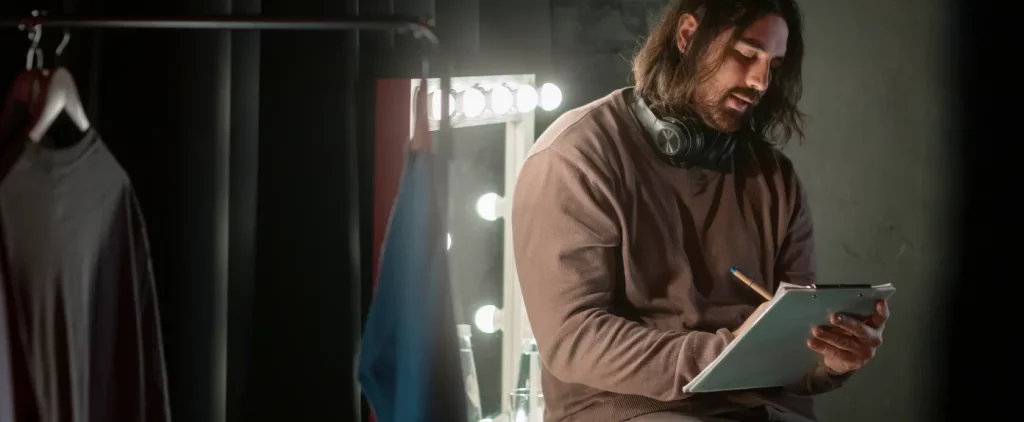
Characters in great scripts often have emotional holes to fill. This is why the screenwriters’ job is to diagnose these emotional voids in characters and design the story as a way of confronting those gaps. Writers can recognize those gaps because they come from real human experience. As a result, stories become compelling when characters seek to fill a need, resolve a wound, or repair something missing.
Empathy is part of the job description. The writer has to understand loneliness, fear, grief, desire, etc., and translate that into behavior and choices. Neil Landau, known for Don’t Tell Mom the Babysitter’s Dead, began writing after the loss of his father. He describes how a childhood defined by emotional absence led him to create characters who are also searching for connection, stability, and meaning. This is part of a screenwriter’s job: turning personal emotional experience into character motivation.
Studies of screenwriting have increasingly framed the screenplay as a design document for the moving image. Screenwriting practice has shifted from being regarded simply as a “working document” to being recognized as a full creative and research artifact in its own right.
This foundational role means the script influences every department that follows. When a production company weighs a potential project, the writer’s draft is often the element that anchors the entire package.
Beyond dialogue or scene description, the screenwriter has the job of creating the narrative architecture—the emotional and structural path the audience follows. This is true whether it’s a feature film, short film, television show, or even a commercial.
A key principle underlying strong screenwriting is character-driven causality. The best stories unfold because of who the characters are, not because a twist is required on a particular page. In development, this is often what distinguishes one script from another. When choices arise naturally from personality and circumstance, the story feels both surprising and inevitable. Whether writing a feature film, short film, or TV episode, the screenwriter’s task is to ensure that major story beats can only arise from these specific people in this specific situation. That alignment between character and event is what gives a script its foundation.
The Screenwriter’s Role in the Film Production Process
A significant number of working screenwriters begin their careers inside development offices. Their job there is to read large volumes of scripts and discuss them with producers and executives. In that setting, a screenplay is not treated as a purely artistic object. It is a working document that must be evaluated quickly for story strength, character clarity, structural logic, and potential production challenges. Exposure to this environment teaches writers how films and television projects are actually selected: through coverage reports, quick “what did you think?” conversations, and long creative debates inside a production company.
Interestingly enough, the individuals who stand out in development are not always the most experienced, but the ones who can articulate a thoughtful point of view and stay consistent when challenged. That same expectation applies to screenwriters. Producers and directors look for writers who can identify what works, what doesn’t, and why. This does not mean resisting collaboration. It means holding a clear perspective and navigating conversations without losing the thread of the story. A screenwriter is hired not only to generate pages but to bring a voice that can withstand real creative discussion.
The production process reinforces this expectation at every stage.
Development phase
A project begins when a producer or company acquires or commissions a screenplay. Treatments and early drafts help determine feasibility: budget, cast size, location needs, and market potential. At this stage, the script often becomes the anchor that attracts financing, talent, and early partners.
Pre-production
Once greenlit, the screenplay becomes a functional guide for every department. The writer may participate in meetings related to storyboards, design, and logistics to ensure narrative clarity. Scene revisions often arise here, shaped by schedule changes or practical constraints. The goal is to adapt without weakening the story’s internal logic.
Production
During actual shooting, scripts continue to shift. Directors, actors, and department heads may require adjustments to dialogue, pacing, or character motivation. A screenwriter can be asked to refine scenes quickly while preserving emotional continuity. Production moves in real time, and the writer’s presence supports alignment between intention and execution.
Post-production
Even though the camera has stopped rolling, the screenplay remains a reference point. Editors use it to understand narrative rhythm and character arcs. If reshoots or pickups are needed, the writer may adapt scenes to fit new material. The script informs choices about structure, clarity, and final storytelling shape.
You can often tell within a few pages whether a screenplay has been written by someone who trusts their own voice. Confident writing doesn’t hold the audience’s hand or explain every beat; it drops us into a situation that’s already moving and lets us catch up. Information is delivered with shorthand rather than long exposition, and scenes assume the reader is smart enough to connect the dots. On the other hand, pages that slowly spell everything out, repeat familiar ideas, or over-explain basic emotions tend to feel tentative and unsure. Part of the screenwriter’s role is to project that authorial confidence on the page, so that everyone reading feels they’re in capable hands.
Conclusion
Many contemporary screenwriters build careers not by waiting for a huge studio film, but by writing stories that can realistically be made at an independent or modest budget and still feel cinematic. That might mean limiting locations, focusing on a contained ensemble, or designing set-pieces that are intense without requiring massive visual effects. In a world where indie film streaming service, on-demand outlets, and smaller distributors all need fresh content, writers who create scripts that are both dramatically engaging and producible have a real advantage.
We invite you to explore independent films available on the UVOtv. If you’re a movie creator exploring distribution options, consider joining the UVOtv publishers portal, where creators can upload projects, manage releases, and connect directly with a growing community of diaspora viewers.